

Survey: Job security concerns are fueling side hustles in 2026
January 13, 2026 Written by Careerminds

Compare providers
Download our outplacement comparison sheet

Request pricing
Compare our rates to other providers
In 2026, the phenomenon of a side hustle is almost a norm. The “side hustle” term, referring to having a second source of income through any form, is estimated to hit a market size of $1,847 billion by 2032.
Forms of side hustles differ, from selling crafts on Etsy to renting out a spare room to taking a stab at freelance work. Beyond the need for earning an extra buck, a rising number of workers in 2026 are using side hustles as a buffer: a safety net in case their full-time job suddenly becomes less secure.
What we did
In January 2026, Careerminds surveyed 1,000 professionals who work both a full-time job and a side hustle to understand the motivations driving people to seek an additional income in 2026. The survey explored the role job security plays in that decision, and the impact that juggling multiple income streams has on workers’ wellbeing.
Job security fears fuel second incomes
Side hustling is seemingly as American as apple pie, with over two-thirds (66.5%) of American adults taking on side jobs in addition to their full-time occupation, according to the survey’s findings.
However, for many workers, side hustlers are less about ambition or a passion project and more about necessity. Nearly two-thirds of side hustlers (64.1%) say they feel pressured to earn additional income due to concerns about job security in 2026.
What’s driving side hustles in 2026?
While the rise of side hustles during the pandemic saw workers turning hobbies and passions into cash, side hustling in 2026 is about responding to financial demands and job uncertainty. Outside of the motivation to earn extra income, more than a third of workers (37.5%) are doing so to build a safety net should they be laid off, while another third (34.9%) are using side projects to pick up new skills.
Other motivations for side hustles include:
Gen Z is using side hustles as ‘career insurance’
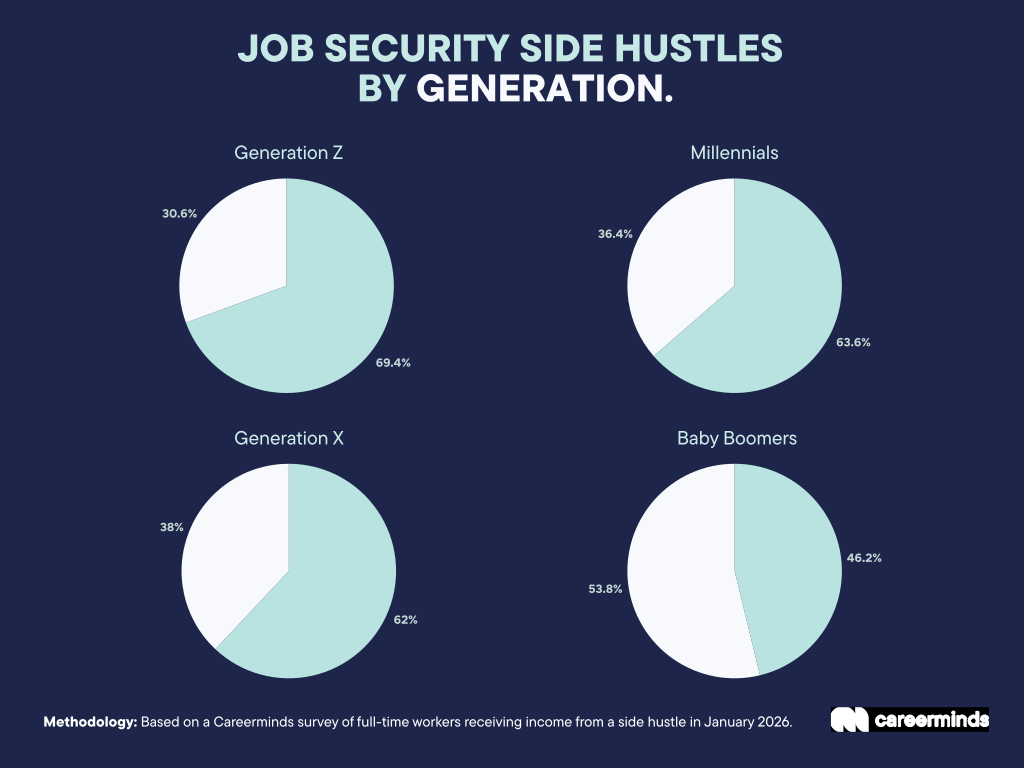
Gen Z is leading the pack with side hustling for job security. Nearly seven in ten (69.4%) say they are taking extra work as a financial safety net, ahead of 63.6% of millennials. Gen Z’s interest in seeking side hustles as career insurance may come as little surprise, given that job confidence among the youngest workers at its lowest year over year since 2020.
Female workers are also slightly more likely than their male counterparts to side hustle for job security, with 67.6% of women taking on extra work compared with 61.5% of men. This finding is supported by broader research indicating that women are more likely to experience job insecurity, which may be driving the need for additional work as a financial safety net.
How much do side hustles contribute to overall income?
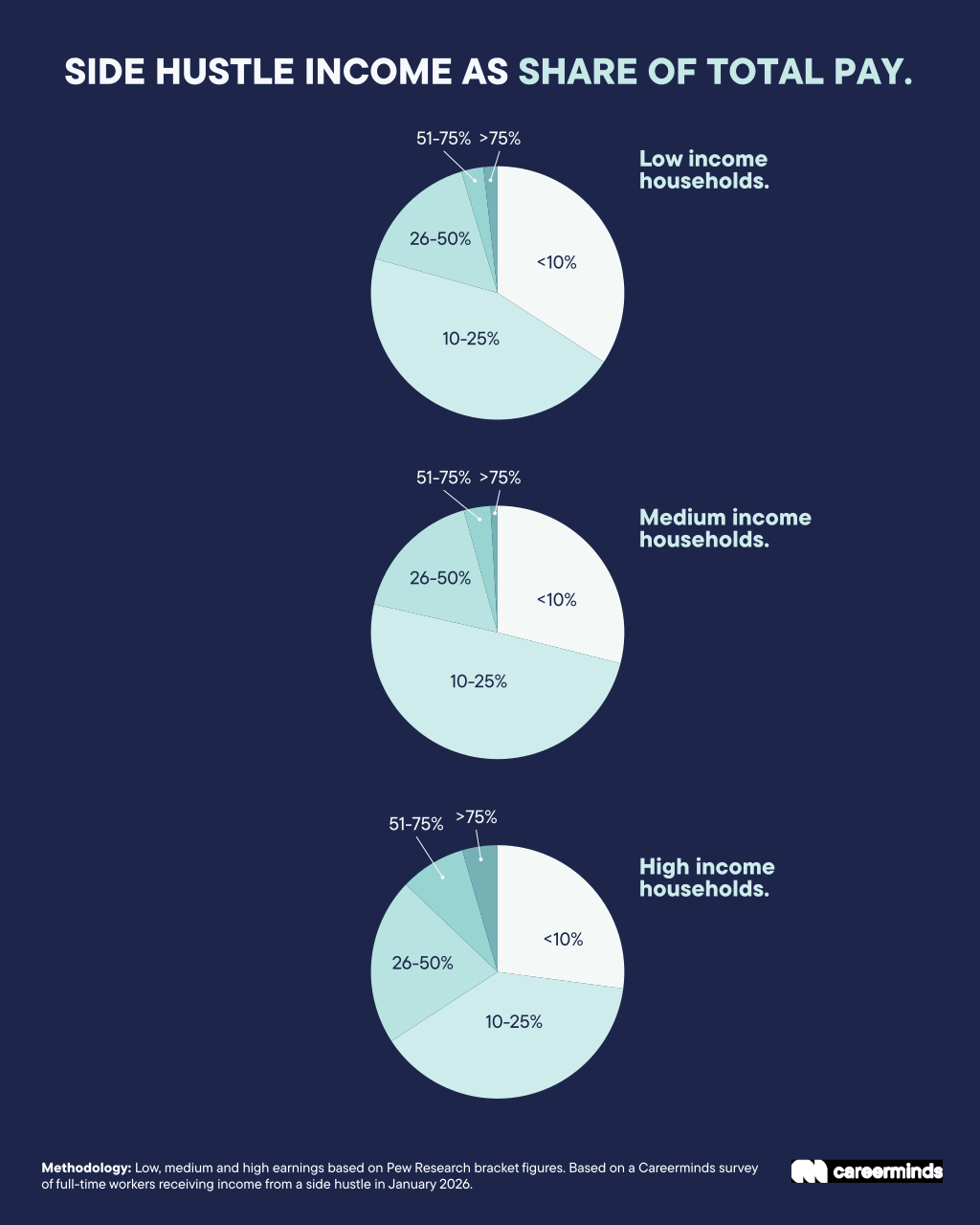
Side hustles contribute a meaningful slice of income for many workers. Most side hustlers (43%) earn between 10-25% of their total income from extra work, while nearly a third (32.5% earn less than 10%).
Across all income groups, the majority earn 25% or less of their total income from side hustles. This accounts for 79.2% of low-income earners, 78.5% of middle earners, and 75.8% of high earners.
Side hustlers are trading free time for job security
Side gigs aren’t just taking a few hours here and there. To generate a quarter of their total income, the average American side hustler is spending around a fifth of their free time outside of full-time work on a second job.
For many, it amounts to another part-time role. More than a third (35.1%) spend 11-15 hours every week on their second income, while another third (31.5%) of workers dedicate 5-10 hours. Meanwhile, one in five (20.4%) are working an additional 16 to 20 hours a week, on top of an already full-time schedule.
What started as a financial safety net is, for a lot of workers, becoming a source of added pressure. Longer working weeks, blurred boundaries, and consistent uncertainty are turning “career insurance” into a significant source of stress among gig workers.
Side hustling is adding to stress and burnout
There’s no denying that these entrepreneurial endeavors, whatever their form, require a lot of time, energy, and effort. And when paired with job security concerns, an eye-watering 54.9% say their extra work has contributed to moderate or severe burnout. In fact, the vast majority (87.4%) report at least some increase in stress.
Should I tell my employer about a side hustle?
Of those side hustlers surveyed, almost a third (32.2%) shared that they are operating a side hustle without their employer’s knowledge. Over a quarter (26.5%) of workers shared that their employer was aware that they had a side hustle, but didn’t know the details, whereas 41.3% of workers disclosed the full details of their side hustle to their boss.
“Whether you need to tell your boss about a side hustle really depends on your situation,” says Amanda Augustine, career expert and certified professional career coach (CPCC). “It comes down to your relationship with your employer, your company’s culture, and what’s spelled out in your employment agreement. Some employers are perfectly fine with employees pursuing outside work on their own time; others take a much stricter view.
“That said, things get more complicated if your side hustle overlaps with your full-time role, competes with your employer, or creates a potential conflict of interest. From an employer’s perspective, the biggest concern is whether outside work could interfere with your performance or loyalty. No one can fault someone for being a go-getter on their own time, but if there’s any chance your side hustle could blur those lines, transparency is usually the smarter move.”
Keeping a side hustle under wraps can add extra pressure, even for workers who are otherwise confident in their roles. For some, this discretion can even be driven by concerns over job security — the very reason they took on the side hustle in the first place. In some cases, the extra work intended to provide peace of mind can instead contribute to stress and burnout.
Workers would trade their side hustle for greater job security
Many side hustlers with layoff fears are clear about one thing: they would scale back or even give up their second job if they felt more supported in their full-time role. Careerminds’ survey found that over 63% of side hustle workers said extra support from their employer would moderately or significantly improve their sense of job security and reduce the need for a side hustle. In fact, only 11% felt that additional support would make no difference.
Side hustlers are looking for more than just an increase in pay packet – they want actionable support that solidifies their job security and wellbeing. Almost one in three workers (30.8%) feel that the promise of outplacement services would bolster their confidence in their current situation, whereas 61.5% are more interested in career growth and upskilling opportunities.
How employers could reduce side hustle burnout:
– Opportunities for growth and upskilling: 61.5%
– Regular updates about job stability: 50.9%
– Financial wellness programs: 48.1%
– Flexible work arrangements: 39.6%
– Clear communication about company direction: 39.3%
– Mental health or well-being support: 37.7%
– Outplacement services: 30.8%
– Career coaching or development resources: 29.3%
For many workers, side hustles are a crucial source of financial security for many in 2026. Access to training, guidance, and outplacement services could not only reduce the need for extra work but also help employees feel more secure, supported, and more confident about their future.
Methodology
This report is based on a survey conducted by Careerminds in January 2026, gathering insights from 1,000 full-time workers who also receive an income from a side hustle.




bring the CHALLENGE.
wE have the SOLUTION.
Protect your brand and support your people through change. From career transition to leadership development, we bring clarity and care to the moments that matter most.